Best Non GamStop Casino UK 2026
Loading...
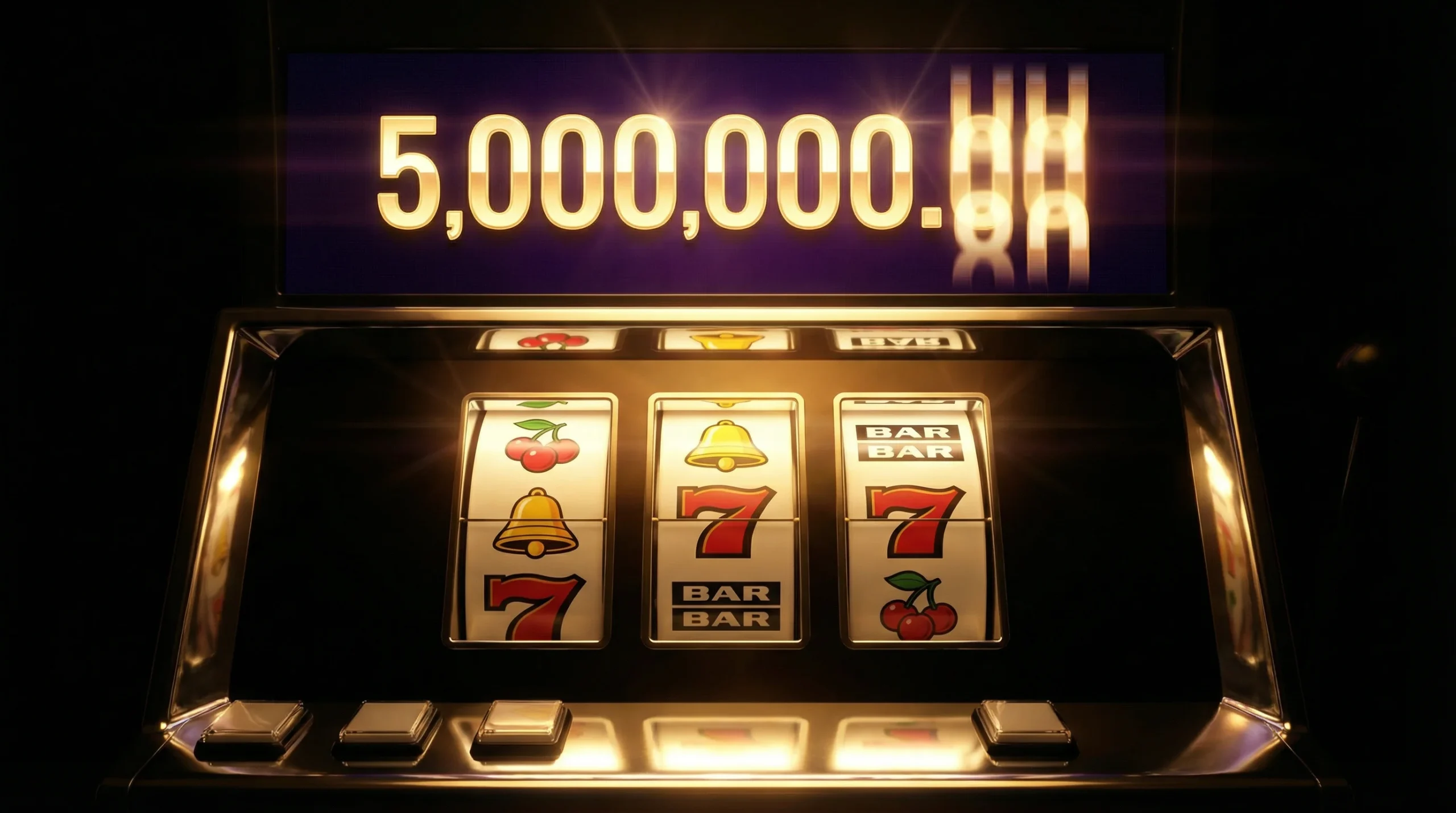
Progressive jackpots pool a fraction of every bet across a network — growing until one spin triggers a payout that can reach millions. The concept is simple: a small percentage of each wager on a linked game is diverted into a communal prize pool. That pool increases with every bet placed by every player at every casino offering the game, accumulating until a single spin randomly triggers the payout. The winner receives the pool. The counter resets to a base amount. The cycle begins again.
Progressive jackpot slots are the lottery tickets of the online casino world — low probability, life-changing payout, and a cost structure that’s less favourable than non-progressive alternatives. Understanding how the accumulation works, which titles dominate the UK market, and what your actual chances of winning look like is essential for approaching these games with realistic expectations rather than the manufactured excitement of a marketing banner showing a seven-figure number.
How Progressive Jackpots Accumulate
Every progressive jackpot starts with a seed amount — the minimum guaranteed payout set by the game provider or network operator. For Mega Moolah, the Mega Jackpot seed is £2 million. This means the jackpot will never drop below £2 million, regardless of when it was last won. The seed is funded by the network operator (Games Global, in Mega Moolah’s case) as a cost of running the jackpot system.
Above the seed, the jackpot grows through a contribution rate — a fixed percentage of every bet that’s siphoned into the pool. The exact contribution rate varies by game and is typically not publicly disclosed, but industry estimates place it at 1% to 8% of each wager, depending on the jackpot tier. In a four-tier system like Mega Moolah’s (Mini, Minor, Major, and Mega), each tier receives a different contribution percentage, with the Mega tier receiving the largest share.
Network progressives — the type that produces the headline-grabbing multi-million-pound payouts — pool contributions from every instance of the game running at every casino that offers it. When thousands of players across dozens of casinos are simultaneously wagering on the same progressive title, the pool grows quickly. Mega Moolah’s Mega Jackpot has historically triggered at an average of approximately every 49 days, with average payouts around €6.7 million. The pool has exceeded €19 million on at least one occasion.
Local progressives are confined to a single casino or a small group of related casinos. Because fewer players contribute, these pools grow more slowly and peak at lower values — typically thousands or tens of thousands of pounds rather than millions. The odds of triggering a local progressive are correspondingly better, but the payout is smaller. Some UK casinos run daily jackpots (a format popularised by Red Tiger) that must trigger within a 24-hour window, guaranteeing a winner every day but capping the prize at whatever the pool has accumulated in that period.
The trigger mechanism is random. In most progressive slots, the jackpot bonus feature is triggered by a random event independent of the base game’s symbols or paylines. You don’t need to hit a specific combination; the jackpot trigger is determined by a separate RNG event that can occur on any spin. Higher bet sizes increase the probability of triggering the jackpot round in some games (Mega Moolah’s documentation states that higher bets improve the trigger odds), but the jackpot can theoretically fire on any bet size, including the minimum. Once triggered, a secondary game — typically a wheel spin or pick-and-click feature — determines which jackpot tier you win.
Major Progressive Jackpot Slots in the UK
Mega Moolah by Games Global (originally Microgaming) is the definitive progressive jackpot slot. Released in 2006, it holds the record for the largest online slot payout: approximately €19.4 million on the Absolootly Mad variant. The base game features five reels, 25 paylines, an African safari theme, and a free spins feature with a 3x multiplier. The base game RTP is 88.12%; when the jackpot contribution is included, the overall RTP rises to approximately 93.42%. The four-tier jackpot system (Mini from £10, Minor from £100, Major from £10,000, Mega from £2 million) provides a range of prize levels, though the Mega is the target for most players. In June 2025, a Betfred customer won £11.5 million from a £1.50 spin — illustrating both the life-changing potential and the extreme improbability of the outcome.
Divine Fortune by NetEnt is a Greek mythology-themed progressive with three jackpot tiers: Minor, Major, and Mega. The game plays on five reels with 20 paylines and includes a Falling Wilds Re-Spin feature and a free spins round. The base RTP is approximately 96.59%, making it significantly more favourable for regular gameplay than Mega Moolah. The Mega Jackpot seeds at a lower value and triggers more frequently but at smaller amounts — typically in the tens of thousands to low hundreds of thousands rather than millions. For players who want progressive mechanics without the severe base-game RTP penalty, Divine Fortune represents a stronger mathematical proposition.
Hall of Gods by NetEnt is a Norse mythology progressive with three tiers: Mini, Midi, and Mega. The Mega Jackpot has historically paid out between €2 million and €7.8 million. The game features five reels, 20 paylines, and an Expanding Wild feature with free spins. The base RTP is approximately 95.7%, placing it between Mega Moolah and Divine Fortune in terms of regular-play returns. The jackpot triggers through a bonus game where the player selects shields to reveal prize amounts — a more interactive format than Mega Moolah’s wheel spin.
Wheel of Wishes by Games Global is a newer addition to the Mega Moolah jackpot network. It shares the same four-tier progressive pool as Mega Moolah, meaning a Mega Jackpot win on Wheel of Wishes draws from the same accumulated fund. The game features a Power Spins mode that guarantees access to the jackpot wheel on every spin — at a higher bet cost. The base RTP is approximately 93.34%. For players specifically targeting the Mega Moolah network’s progressive pool, Wheel of Wishes offers a different gameplay experience while competing for the same jackpot.
What Are Your Actual Chances of Hitting a Jackpot?
The precise odds of triggering a progressive jackpot are not publicly disclosed by most game providers. Estimates derived from historical trigger data and contribution models suggest that the odds of hitting the Mega Jackpot on Mega Moolah are approximately 1 in 50 million spins. Other estimates place it between 1 in 10 million and 1 in 60 million, depending on the bet size and the specific assumptions used. These numbers are comparable to lottery odds — and they should be treated with the same expectations.
The expected value of the jackpot contribution is negative for the player on any reasonable time horizon. The RTP impact is the clearest way to see this. Mega Moolah’s base RTP of 88.12% means that the game returns less per pound wagered in regular play than a standard 96% RTP slot. The difference — roughly 8 percentage points — represents the cost of funding the jackpot pool. Over 1,000 spins at £1, you’d expect to lose approximately £120 on Mega Moolah versus approximately £40 on a 96% RTP non-progressive slot. The £80 difference is, in effect, the price of your lottery ticket. Whether that price is acceptable depends on how much value you place on the infinitesimally small chance of a multi-million-pound payout.
One common misunderstanding: jackpots are not “due.” The trigger is random, determined by a separate RNG event on each spin. A jackpot that hasn’t paid out for 60 days is not more likely to trigger than one that paid out yesterday. The pool size is publicly visible (most games display the current jackpot amount), and some players prefer to play when the pool is large, reasoning that a bigger prize offers better expected value per ticket. This logic is partially valid — a larger pool does increase the expected value of the jackpot component — but the improvement is marginal relative to the astronomical odds of actually winning. Playing when the pool is at £15 million instead of £3 million doesn’t meaningfully change the probability of hitting it.
The Dream Is Real — The Odds Are Not In Your Favour
Progressive jackpot slots sell a specific fantasy: one spin, life changed forever. That fantasy is real. People do win. The Betfred player in June 2025 really did turn £1.50 into £11.5 million. The records are verified, the payouts are documented, and the jackpot pools are funded by real money contributed by real players at real casinos. Nothing about the product is fraudulent.
What’s misleading is the prominence given to the fantasy relative to the probability. The banner showing a £4 million jackpot doesn’t display the odds of winning it. The marketing emphasis on life-changing wins doesn’t mention the base RTP of 88.12%. The celebration of the winner doesn’t account for the millions of players whose contributions funded the prize without receiving any of it. Progressive slots are, mathematically, the most expensive common game in the casino lobby — not because they’re unfair, but because a substantial portion of every bet goes into a pool that only one person will ever receive.
If you enjoy progressive slots for what they are — a high-entertainment, high-cost game with an extraordinarily rare but genuine chance of a massive payout — they have a legitimate place in your game selection. Treat the jackpot contribution as an entertainment premium, the way you’d treat a lottery ticket: money spent, not money invested. Set your budget based on the base game RTP, not the overall RTP that includes the jackpot. And accept that the vast majority of sessions will end without the wheel spinning, the shields revealing, or the plane landing on the Mega tier. The dream is real. The odds say it will almost certainly remain a dream. Both things are true, and holding both in mind is the only honest way to play.