
 Available in GB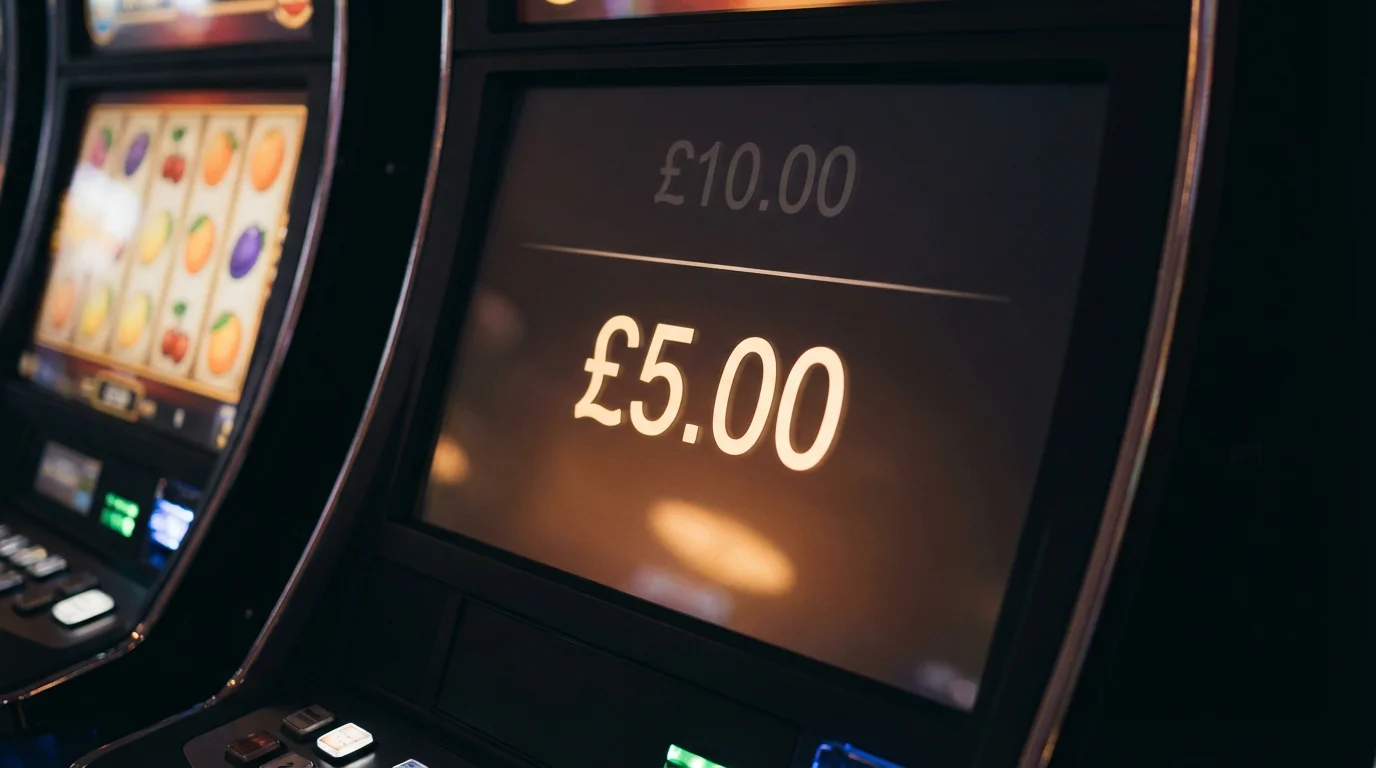
Since April 2025, every UK online slot carries a statutory maximum bet: £5 per spin for players aged 25 and over, £2 for those aged 18–24. The caps apply to all UKGC-licensed online slot products — every video slot, every Megaways title, every progressive jackpot game offered by every licensed operator in the UK market. No exceptions. No opt-outs. The bet button will not accept a stake above the relevant limit, regardless of your bankroll, your VIP status, or your history with the operator.
The stake limits were a centrepiece of the government’s 2023 White Paper on gambling reform and represent the most direct regulatory intervention into game-level economics since the £2 cap on fixed-odds betting terminals (FOBTs) in 2019. This guide explains how the limits work in practice, how they’ve changed player strategy and game selection, and how operators and game providers are adapting to a market where the maximum bet on a slot is now lower than the price of a pint in most of the country.
How the Stake Limits Work
The limits apply per game cycle — meaning per spin. A game cycle is defined as one complete round of play, from the moment the bet is placed to the moment all outcomes (including cascading wins, re-spins, and bonus features) have resolved. You cannot circumvent the limit by placing multiple bets within a single game cycle. If the slot offers a “buy bonus” feature — where you pay a lump sum to trigger the bonus round directly — the buy-in price is also subject to the stake cap. A buy bonus that previously cost £100 is no longer available if it exceeds £5 (or £2 for under-25s).
Age verification drives the two-tier system. All UKGC-licensed operators are required to verify the age of every customer before allowing gambling. The age on your verified account determines which cap applies. If you’re 24 at registration and turn 25 during the life of your account, the operator is responsible for updating your applicable limit. In practice, most operators apply the age-appropriate cap automatically based on the date of birth in the verified KYC records.
The enforcement mechanism is built into the game software. Game providers (NetEnt, Pragmatic Play, Play’n GO, and others) have updated their UK-market game builds to enforce the cap at the interface level. The bet selector on a UK-market slot will not display options above £5 (or £2). This is a hard limit in the code, not a policy that relies on operator discretion. The provider certifies the game to the UKGC with the cap built in; the operator deploys the UK-certified version.
The parallel to FOBT stakes is instructive. In April 2019, the UK government reduced the maximum stake on fixed-odds betting terminals from £100 to £2. That change was driven by the same logic: high-speed, high-stakes gambling on electronic machines produced concentrated harm. The online slot caps follow the same regulatory philosophy — limiting the per-cycle stake on fast-paced electronic games to reduce the rate at which money can be lost. The FOBT limit covered a narrower product set (machines in betting shops); the online slot limit covers a vastly larger market but applies at a higher cap for adult players.
Table games and live casino are not subject to the same caps. The stake limits apply specifically to slots and slot-like games (including some crash games and instant-win products, depending on their classification). RNG and live table games — blackjack, roulette, baccarat, poker — retain higher maximum bets. This distinction reflects the UKGC’s analysis that the speed and automation of slot play present different risk characteristics than dealer-paced table games.
One enforcement detail worth noting: the limits apply to the total stake, not the coin value multiplied by the number of lines. A slot with 20 paylines at £0.25 per line produces a total stake of £5 — exactly at the cap. The same slot at £0.30 per line would total £6, exceeding the cap. Game providers have adjusted their bet-level configurations to ensure the maximum total stake stays within the regulatory limit.
Impact on Player Strategy and Game Selection
For players who previously wagered £10, £20, or more per spin, the caps forced a fundamental recalculation. At £5 maximum, the total amount wagered per hour on a slot running at 600 spins per hour drops from a potential £12,000 (at £20/spin) to £3,000. The hourly expected loss at 4% house edge falls from £480 to £120. The cap didn’t change the odds — it changed the speed at which money can be committed to those odds.
High-volatility slots are the game type most affected by the cap. These games are designed around the relationship between bet size and maximum win potential — a 10,000x win on a £20 bet is £200,000; the same win on a £5 bet is £50,000. The psychological and financial appeal of high-volatility slots at high stakes was a significant driver of the segment’s popularity. At capped stakes, the maximum win potential drops proportionally, which has reduced the appeal for the player segment that treated slots as a high-action, high-reward product.
Bankroll duration has increased for players who previously wagered above the cap. A £500 bankroll at £20/spin provides 25 spins of base-game play before running out (assuming no wins). The same bankroll at £5/spin provides 100 spins. More spins means more variance exposure — more chances for bonus features to trigger, for winning combinations to land, and for the session to develop beyond the first few minutes. Players who adapted their expectations from “big bet, fast result” to “smaller bet, longer session” report a different but not necessarily diminished experience.
A visible shift toward table games and live casino has occurred among players who previously focused on high-stakes slots. Blackjack and roulette accept bets well above £5, and live casino tables routinely offer limits of £50, £100, or more per hand. For players whose engagement was driven by the bet size rather than the game format, table games offer the higher-stakes experience that slots no longer provide. This migration has benefited live casino revenues and RNG table game volumes, though it’s difficult to isolate the stake cap as the sole cause from broader market trends.
How Operators Are Adapting
Game providers have reconfigured their UK game builds. Bet selectors that previously offered ranges from £0.10 to £100 now cap at £5 (or £2). Some providers have introduced new bet-level increments optimised for the £1 to £5 range — more granular options that let players fine-tune their stakes within the permitted window. The game mechanics themselves haven’t changed; the maths models, RTPs, and volatility profiles remain identical. What changed is the maximum input, not the underlying product.
Operators have adjusted their commercial models. Higher-stake slot play generated disproportionate revenue relative to player numbers. With per-spin revenue capped, operators need higher player volumes to maintain the same total slot GGY (gross gambling yield). This has intensified competition for recreational players and shifted marketing spend toward acquisition and retention of a broader base rather than cultivation of a smaller high-value segment.
New product development has focused on games that deliver engagement within the constrained bet range. Providers are investing in bonus mechanics, feature variety, and visual quality rather than relying on high-stake potential as a selling point. The games competing for lobby prominence in the UK market are increasingly those that offer the most compelling experience at £1 to £5, rather than those designed to scale excitement with bet size.
The Cap That Changed the Calculation
The stake limit is a blunt instrument applied to a complex market, and opinions on its effectiveness are divided. Proponents argue it reduces the rate of harm by capping the speed of loss. Critics argue it pushes high-stakes players toward less regulated channels or toward table games where per-hand stakes are uncapped. The UKGC has committed to reviewing the impact of the limits over time, with data on player behaviour, operator revenue, and harm indicators informing any future adjustments.
What’s not debatable is the practical effect on the average player’s session. A £5 maximum bet means a slower accumulation of losses, a longer session per pound deposited, and a lower ceiling on the damage any single session can cause. For the majority of UK slot players — who were already wagering below £5 per spin — the cap is invisible. For the minority who wagered above it, the cap is the most tangible regulatory change since the credit card ban in 2020. Either way, it’s now a fixed feature of the UK market, and every game, every operator, and every strategy must work within it.
Visit casinoonlinerealmoneyuk for comprehensive UK real money casino reviews and guides.
Learn how Self-Exclusion Guide works across UK platforms.